Send a real letter
to your Minnesota
representatives

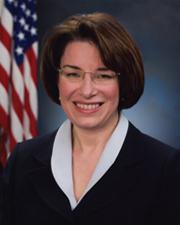
Photo of Senator Amy Klobuchar
Sen. Amy Klobuchar (D)
SENATOR
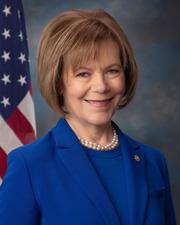
Photo of Senator Tina Smith
Sen. Tina Smith (D)
SENATOR
Enter your zip code
To find your representative
In 3 minutes or less
What's your zip code?
We'll find your congressional representative.
Dear Sen. Tina Smith, Sen. Amy Klobuchar,
2000 characters remaining
Short and sweet is very effective
Need more room?
Letter preview
The Honorable Tina Smith Senior Senator, District of Columbia 720 Hart Senate Office Building Washington, DC 20510
May 13, 2026
Dear Senator Smith,
Sincerely,
Your Name
Your Name, 123 Your Street, Your City, ST 00000
The Honorable Amy Klobuchar Junior Senator, District of Columbia 425 Dirksen Senate Office Building Washington, DC 20510
May 13, 2026
Dear Senator Klobuchar,
Sincerely,
Your Name
Your Name, 123 Your Street, Your City, ST 00000
The Honorable Peter Lillienfield Representative, Congressional District 8 789 House Office Building Washington, DC 20515
May 13, 2026
Dear Representative Lillienfield,
Sincerely,
Your Name
Your Name, 123 Your Street, Your City, ST 00000
Signature
Time to send!
Printing + first-class mail (x3)
Pay what you can

We believe cost should not be a barrier to civic engagement

$8
cover printing/postagehelp keep us independent
How does it work?
Q. Do you actually mail letters in the actual mail?
Yes, your letter will be printed on real paper, put in a real envelope with a real stamp, and mailed to the actual physical offices of your representatives.
Q. Is this site affiliated with any party or political agenda?
No, this is a fully nonpartisan site focused on civil engagement. We are fully supported by our users and we accept no funds from investors, political groups, or anyone seeking to influence the contents of this site. We are focused on maintaining full independence and serving as a platform to connect United States citizens with their government.
Q. Do you add any site branding to the letters you send?
No. This site serves as a platform to connect you with your government. Your representatives will receive a plain white envelope with your return address printed on it. Inside the envelope is your letter, just as it appears in the preview above. No additional branding or information is added.
Q. Can I say anything I want to my representatives?
We allow all speech protected by the First Amendment through this platform. We do not allow forms of illegal speech such as true threats, incitement to lawless action, blackmail, defamation, harassment, doxxing, or sexual content involving minors.
Q. Will you add AI tools that write letters automatically?
No.
Who represents Minnesota?

Minnesota sends ten members to the United States Congress: two senators, who represent the state as a whole, and eight representatives, one for each of Minnesota's eight congressional districts. The sections below provide background on each member of the delegation, along with a separate, regularly updated section covering their current committee assignments and recent legislative activity.

Tina Smith — Senator

Tina Smith is the junior United States Senator from Minnesota, having served in the Senate since 2018 after being appointed by Governor Mark Dayton to fill the seat vacated by Al Franken. A member of the Democratic Party, she was born in Albuquerque, New Mexico, in 1958 and earned degrees from Stanford University and Dartmouth College's Tuck School of Business. Before her Senate appointment, she served as the 48th Lieutenant Governor of Minnesota under Governor Dayton, and before that as his chief of staff. She also had a career in business and previously served as vice president of external affairs for Planned Parenthood of Minnesota, the Dakotas, and South Dakota.

Smith serves on the Senate Agriculture, Nutrition, and Forestry Committee — where she has been a leading voice on food security, rural economic development, and support for family farmers — and on the Senate Banking, Housing, and Urban Affairs Committee, and the Senate Health, Education, Labor, and Pensions Committee. She has focused on mental health policy, affordable housing, agricultural policy, and expanding access to reproductive healthcare. Her background with Planned Parenthood has made her a consistent Senate advocate for reproductive rights and family planning services.

Amy Klobuchar — Senator

Amy Klobuchar is the senior United States Senator from Minnesota, having served in the Senate since 2007. A member of the Democratic Party, she was born in Plymouth, Minnesota, in 1960 and earned degrees from Yale University and the University of Chicago Law School. Before her election to the Senate, she served two terms as the Hennepin County Attorney, the chief prosecutor for Minnesota's most populous county encompassing Minneapolis, where she built a reputation as an effective and pragmatic law enforcement official. She was elected to the Senate in 2006 and has won reelection by wide margins, and she mounted a well-regarded campaign for the Democratic presidential nomination in 2020 before endorsing Joe Biden.

Klobuchar is a senior member of the Senate Judiciary Committee and the Senate Commerce, Science, and Transportation Committee, and has chaired the Senate Rules and Administration Committee. She has focused on antitrust enforcement — authoring major bipartisan legislation targeting large technology platforms — agriculture, rural economic development, and prescription drug pricing. Her reputation as a pragmatic dealmaker willing to work across the aisle has made her effective in moving legislation in an often-gridlocked Senate, and she has been among the most prolific legislators in terms of passing bills into law.

Brad Finstad — Representative — CD-01

Brad Finstad is the United States Representative for Minnesota's 1st Congressional District, which covers the southern tier of the state including Rochester, Mankato, and the agricultural communities of southern Minnesota. A member of the Republican Party, he has served in the House since 2022, having won a special election following the death of Representative Jim Hagedorn. Finstad was born in New Ulm, Minnesota, in 1976 and earned degrees from the University of Minnesota. Before his election to Congress, he served as the Minnesota state director of the U.S. Department of Agriculture's Farm Service Agency and worked in his family's farming operation.

Finstad serves on the House Agriculture Committee, where his background as a farmer and rural development official gives him direct expertise in farm policy, crop insurance, and rural community needs. He has focused on agricultural competitiveness, rural infrastructure, and regulatory issues facing farm operations in southern Minnesota. His district's strong agricultural character — encompassing significant corn, soybean, and hog production — has shaped his work on the Farm Bill and trade policies affecting Minnesota's farm economy.

Angie Craig — Representative — CD-02

Angie Craig is the United States Representative for Minnesota's 2nd Congressional District, which covers the southern suburbs of the Twin Cities including Eagan, Burnsville, Lakeville, and communities stretching to the rural areas of southeastern Minnesota. A member of the Democratic Party, she has served in the House since 2019, having been elected in 2018 after narrowly losing a race for the seat in 2016. Craig was born in Dyersburg, Tennessee, in 1972 and earned her degree from the University of Memphis. Before her election to Congress, she had a career in the medical device industry, serving as a senior executive at St. Jude Medical, and was involved in Democratic Party politics in Minnesota.

Craig serves on the House Agriculture Committee and the House Energy and Commerce Committee. She has focused on healthcare affordability — drawing on her industry background — agricultural policy, and economic development in the suburban and rural communities of her district. She was the first openly gay parent elected to Congress. Her district, which spans both affluent Twin Cities suburbs and more rural communities, has required her to balance the priorities of diverse constituencies and has made her one of the more competitive seats in the Minnesota delegation.

Kelly Morrison — Representative — CD-03

Kelly Morrison is the United States Representative for Minnesota's 3rd Congressional District, which covers the western suburbs of Minneapolis including Plymouth, Minnetonka, Eden Prairie, and Hopkins. A member of the Democratic Party, she has served in the House since 2025, having been elected in 2024. Morrison was born in the Twin Cities area and earned her medical degree from the University of Minnesota Medical School; she practiced as an OB-GYN physician before entering politics. Before her election to Congress, she served in the Minnesota House of Representatives.

Morrison entered Congress as a physician with particular expertise in women's health and reproductive medicine, and those issues have been central to her legislative identity. She has focused on protecting access to reproductive healthcare, expanding maternal health services, and addressing healthcare affordability. Her district's highly educated, suburban electorate has also shaped her work on education funding, environmental issues, and economic competitiveness. She represents a district that has shifted significantly toward Democrats over the past decade as the Minneapolis suburbs have trended away from the Republican Party.

Betty McCollum — Representative — CD-04

Betty McCollum is the United States Representative for Minnesota's 4th Congressional District, which covers St. Paul, the state capital, and its inner suburbs including Maplewood and Roseville. A member of the Democratic Party, she has served in the House since 2001. McCollum was born in South St. Paul, Minnesota, in 1954 and earned her degree from the College of St. Catherine (now St. Catherine University). Before her election to Congress, she taught school and served in the North St. Paul City Council and the Minnesota House of Representatives.

McCollum is a senior member of the House Appropriations Committee, where she serves on the Defense and Interior subcommittees, and has focused on international development, Native American rights, and global health. She chairs the Native American Caucus and has been one of Congress's most consistent voices on issues affecting tribal nations, including tribal sovereignty, land rights, and federal investment in Native communities. She has also been active on international issues, including oversight of U.S. foreign assistance and the well-being of Palestinian civilians, and has focused on environmental conservation and public lands protection.

Ilhan Omar — Representative — CD-05

Ilhan Omar is the United States Representative for Minnesota's 5th Congressional District, which covers Minneapolis and some of its inner suburbs. A member of the Democratic Party, she has served in the House since 2019, having been elected in 2018. Omar was born in Mogadishu, Somalia, in 1982 and came to the United States as a refugee, becoming a naturalized citizen. She earned her degree from North Dakota State University. Before her election to Congress, she worked as a community education director and served in the Minnesota House of Representatives. She made history as the first Somali-American elected to Congress and the first woman to wear a hijab in the U.S. House of Representatives.

Omar is a member of "The Squad," a group of progressive House Democrats. She serves on the House Foreign Affairs Committee and the House Education and the Workforce Committee. She has been one of the most outspoken members of Congress on Palestinian rights, U.S. foreign policy in the Middle East, and humanitarian aid — positions that have generated both intense support and significant controversy. Domestically, she has focused on economic justice, housing affordability, and addressing the needs of Minneapolis's large immigrant and refugee communities. She was removed from the Foreign Affairs Committee by the Republican majority in 2023 over her past comments, sparking significant debate over congressional norms.

Tom Emmer — Representative — CD-06

Tom Emmer is the United States Representative for Minnesota's 6th Congressional District, which covers the northwestern suburbs of Minneapolis and St. Paul including St. Cloud, Anoka, and Elk River, extending into the more rural communities of central Minnesota. A member of the Republican Party, he has served in the House since 2015. Emmer was born in South Bend, Indiana, in 1961 and earned his law degree from William Mitchell College of Law. Before his election to Congress, he served in the Minnesota House of Representatives and practiced law, and he ran unsuccessfully for governor of Minnesota in 2010.

Emmer serves as House Majority Whip, the third-ranking position in the House Republican leadership, responsible for counting votes and driving the legislative agenda of the majority party. He previously chaired the National Republican Congressional Committee, the campaign arm of House Republicans, during a cycle in which the party regained the House majority. He has focused on financial services regulation — particularly cryptocurrency policy, having been an early congressional advocate for digital assets — economic competitiveness, and conservative fiscal policy. His leadership role makes him one of the most powerful figures in the House.

Michelle Fischbach — Representative — CD-07

Michelle Fischbach is the United States Representative for Minnesota's 7th Congressional District, which covers the vast western region of Minnesota bordering North and South Dakota, encompassing Moorhead, Willmar, and the predominantly agricultural Red River Valley. A member of the Republican Party, she has served in the House since 2021, having been elected in 2020. Fischbach was born in Minneota, Minnesota, in 1966 and earned her law degree from the Mitchell Hamline School of Law. Before her election to Congress, she had a long career in Minnesota state government, serving as a state senator, president of the Minnesota Senate, and ultimately as the 50th Lieutenant Governor of Minnesota under Governor Tim Pawlenty.

Fischbach serves on the House Agriculture Committee and the House Energy and Commerce Committee. Her district's overwhelmingly agricultural character — encompassing sugar beet, wheat, corn, and soybean farming in the fertile Red River Valley — shapes her work on Farm Bill policy, crop insurance, and rural infrastructure. She has been a consistent conservative voice on fiscal policy, energy regulation, and agricultural issues. Her long experience in Minnesota state government before arriving in Washington has given her a practical understanding of federal-state policy interactions affecting rural communities.

Pete Stauber — Representative — CD-08

Pete Stauber is the United States Representative for Minnesota's 8th Congressional District, which covers the Iron Range and northeastern Minnesota including Duluth, Hibbing, and the communities along the Canadian border — a district with a long history as a mining and timber stronghold. A member of the Republican Party, he has served in the House since 2019, having been elected in 2018 in a district that had been represented by Democrats for decades. Stauber was born in Duluth, Minnesota, in 1966 and earned his degree from Lake Superior College. Before his election to Congress, he played professional hockey in the minor leagues and later had a career as a police officer in Duluth, rising to the rank of detective, and served on the St. Louis County Board of Commissioners.

Stauber serves on the House Natural Resources Committee and the House Transportation and Infrastructure Committee. He has been a strong advocate for the mining industry, particularly for the development of copper-nickel mines in northeastern Minnesota — a contentious regional issue — and for the interests of labor unions that have historically backed mining and industrial employment. His background as a law enforcement officer has informed his focus on public safety and backing for police. His election and reelection in a district with deep blue-collar Democratic roots reflects the broader political realignment occurring in working-class communities across the Midwest.